If you’re wrapping up your homeschool year and feeling that quiet pressure…
Like you should have done more…Finished more…Stayed more consistent…
You’re not alone. And more importantly? You might be measuring the wrong things.
Because here’s what most homeschool moms do this time of year: We look at what didn’t get done. The unfinished lessons. The skipped units. The plans that… well… never really happened.
But what if that’s not actually the best way to evaluate your year?
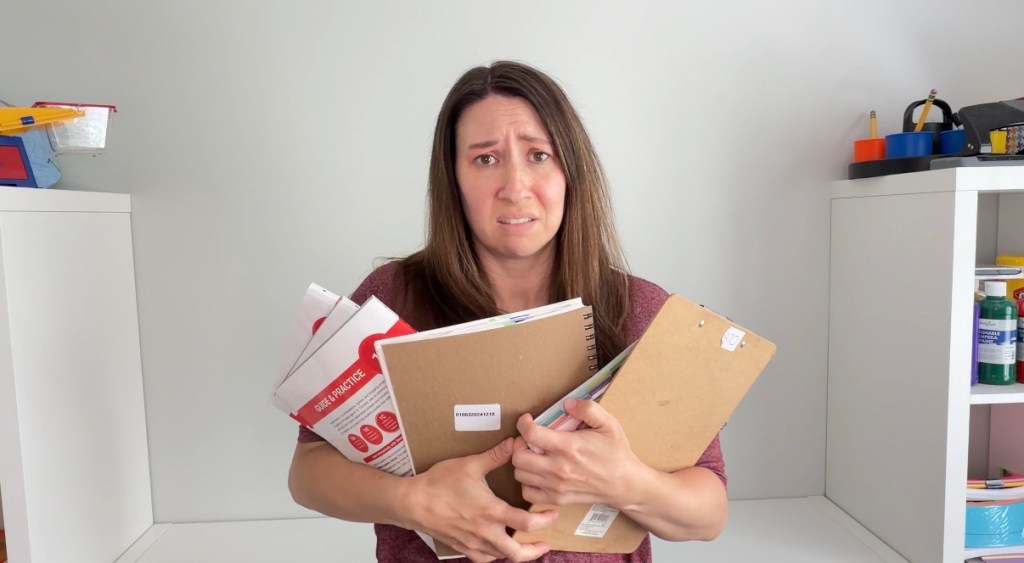
The Problem With “Did We Finish?”
Let’s be honest, finishing the curriculum feels like the goal.
It’s clean. It’s measurable. It gives you that satisfying sense of closure. But it’s also… a little misleading.
Because finishing doesn’t actually tell you:
- What your child understood
- What became natural for them
- What changed over time
And as a former classroom teacher, I can tell you this: Even in traditional schools? Things don’t always get finished either. The difference is, they have systems to show progress.
At home, you have something better. You just have to learn how to see it.
A Better Question to Ask
Instead of asking: “Did we finish everything?” Try asking: “What actually changed this year?”
That one shift will completely change how you see your homeschool. Because growth doesn’t always show up in neat, completed pages. It shows up in the in-between.
The Growth You Didn’t Realize You Were Measuring
Here’s what often gets missed… Your child didn’t just “do school” this year.
They changed in ways that don’t show up in a checklist.
You might notice things like:
- They sit longer without getting frustrated
- They try again instead of giving up immediately
- They handle transitions a little more smoothly
- They express themselves more clearly
These are not small things. These are foundational shifts. And they matter more than checking off a lesson.
Why Homeschool Feels Harder at the End of the Year
There’s a reason this season feels heavier.
You’ve been carrying:
- The planning
- The teaching
- The adjusting
- The emotional load of “Is this enough?”
All year long.
So when you look back and focus only on what didn’t happen…It can feel like the whole year didn’t “count.” But that’s not accurate. It’s just incomplete.
What to Look At Instead (A Simpler Way to Reflect)
If you want a clearer picture of your homeschool year, zoom out.
Look for patterns, not perfection.
Here are a few simple places to start:
1. Look Back at the Beginning
Go find something from the start of your year.
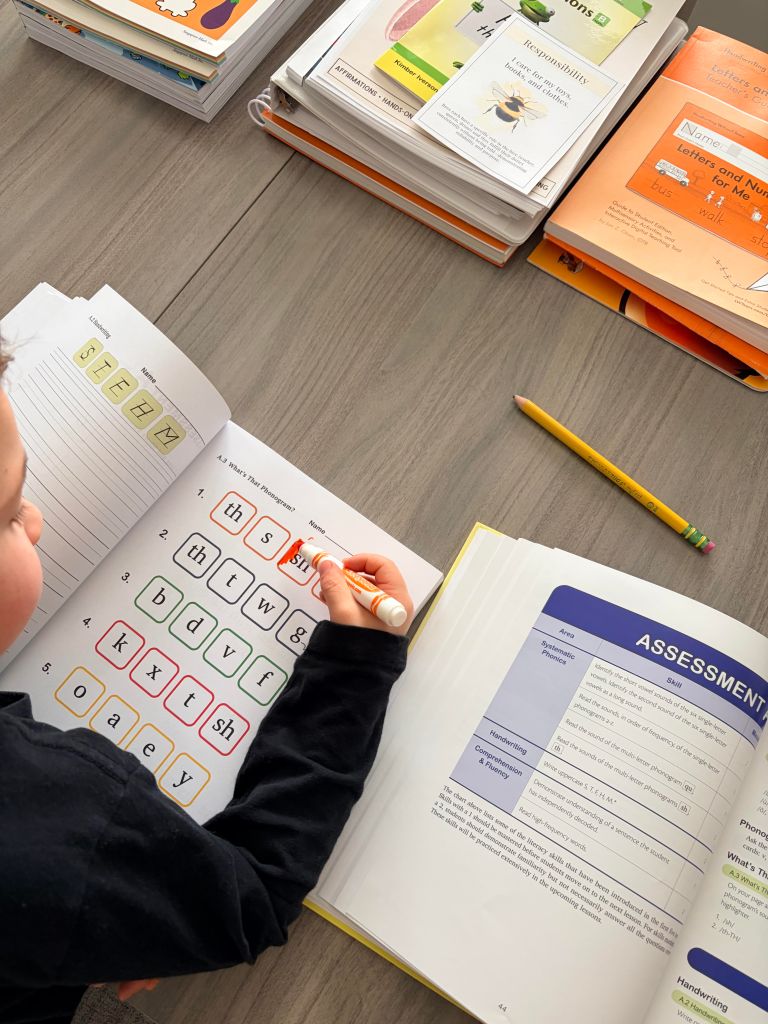
A worksheet. A drawing. A first attempt. Then compare it to now. That difference? That’s growth.
2. Think About Daily Life (Not Just School Time)
Ask yourself:
- What feels easier now than it used to?
- Where do I see less resistance?
- What routines run more smoothly?
This is where a lot of real progress lives.
3. Notice the “Small” Wins
The small things are easy to overlook because they happen gradually.
But they stack.
Things like:
- Following through without reminders
- Taking responsibility for small tasks
- Recovering quicker after frustration
That’s not accidental. That’s development.
4. Consider What You Prioritized
Every homeschool year has a focus, even if you didn’t name it.
Maybe this year was about:
- Building routines
- Learning how to learn
- Strengthening connection
- Developing independence
If that’s what grew…then your year worked.
The Truth Most People Don’t Say
Not every area grows at the same time. Some things will move quickly. Others will feel… slow.
That doesn’t mean something is wrong. It means your child is developing in layers.
And sometimes the areas that seem “quiet” are actually building underneath.
What This Means for Next Year
This kind of reflection doesn’t just help you feel better about this year…it gives you clarity for the next one. Instead of reacting out of frustration (“we need to do more!”), you can move forward with intention.
You can decide:
- What actually matters most
- What you want to focus on next
- What can be simplified
That’s how homeschool becomes sustainable.
One Simple Thing to Do Before You End Your Year
Before you pack everything away…
Take 10–15 minutes and do this:
- Flip through your child’s work
- Scroll back through your photos
- Think through your daily rhythms
And then ask yourself: “Where do I see growth?” Not perfection. Not completion. Just growth.
Because I promise, it’s there.
And One More Thing (That Might Surprise You)
If you ask your child what they’re most proud of this year, their answer probably won’t be what you expect.
It won’t be: “Finishing math.” It’ll be something like:
- “I learned to ride my bike.”
- “I made a new friend.”
- “I can read now.”
And that? That’s your reminder. Homeschool isn’t just about what your child completed. It’s about who they’re becoming.
Final Thought
You’re not behind. You didn’t ruin anything. And your homeschool year didn’t fall short. You just might need a better lens to see it clearly.




Leave a Reply