If you’re trying to figure out what to use for kindergarten in your homeschool, I completely understand how overwhelming it can feel.
There are so many options. And honestly, as a former teacher, I think that can almost make it harder, not easier, because you start to wonder what actually matters and what doesn’t.
When I started homeschooling my own son, I knew I didn’t want to just recreate school at home.
I was looking for things that were:
- effective
- realistic to use every day
- and actually meaningful for how kids learn at this age
So this isn’t everything that exists, this is what we actually use, what’s worked for us, and why I chose it.
And if you want to see everything up close and hear me talk through it in more detail, you can watch the full video here:
I also share how we’re intentionally building responsibility alongside academics, which has made a big difference in our homeschool.
How I Think About Kindergarten
Before I get into specific curriculum, I think this part matters most.
Kindergarten at home doesn’t need to look like school. After 13 years in the classroom, I can tell you, young kids don’t learn best from more worksheets or longer lessons.
They learn from:
- repetition
- simple, consistent routines
- and being able to apply things in real life
So when I chose our curriculum, I wasn’t just thinking:
“Does this teach the skill?”
I was thinking:
“Will this actually work in our day?”
That’s what guided everything.
Math
Singapore Dimensions Math
This was one of the first programs I chose because it has a really strong foundation.
It’s very clear, very structured, and it does a great job building number sense in a visual way.
If you like something that feels a little more traditional and step-by-step, this is a really solid option.
We started here, and I still think it’s a great program.
Beast Academy
But this is where things shifted for us.
We ended up moving away from Singapore and switching to Beast Academy, and that decision really came down to my son.
He didn’t just want to practice math… he wanted to figure things out.
Beast Academy is very different. It’s built around logic and problem solving, and it feels much more like puzzles than traditional math work.
It’s also more rigorous in a different way, not in volume, but in thinking.And for him, that made all the difference. He enjoys it. He sticks with it. He wants to keep going.
And as a teacher, I’ve learned that when a child is engaged like that, they’re willing to work through challenges instead of avoiding them.
It’s often considered more of an enrichment-style program, but for us, it’s been exactly what he needed.
Character Education
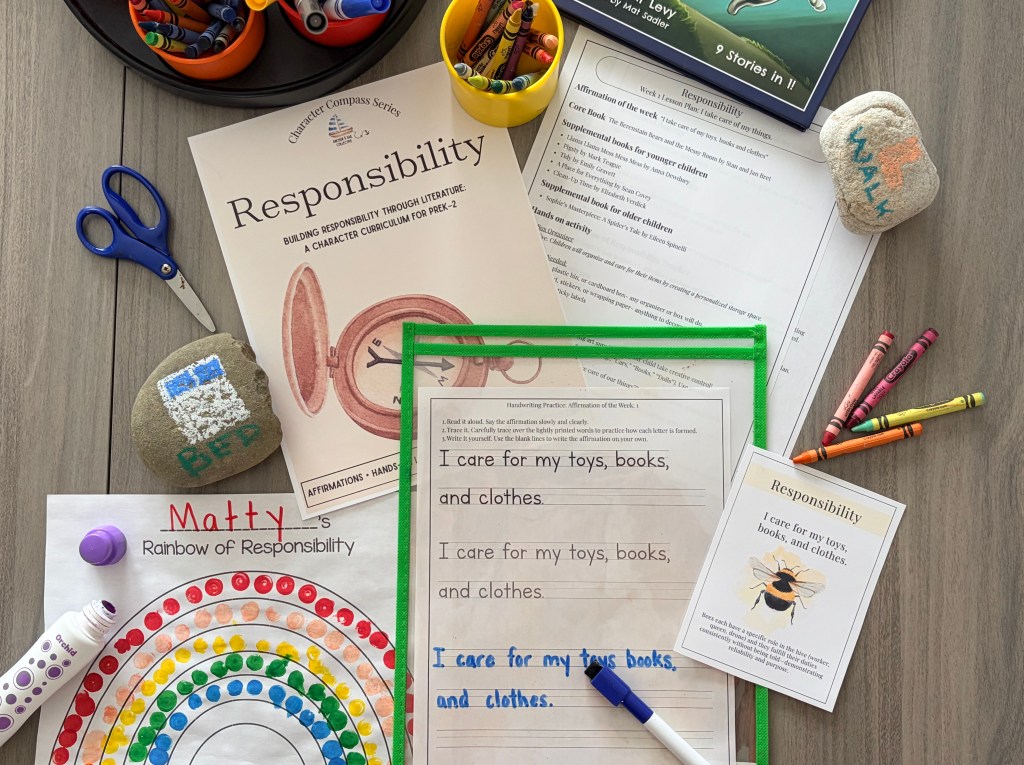
Character Compass: Responsibility
This is something I created, and honestly, it came from years of seeing the same thing over and over again in the classroom. Kids don’t usually struggle because they can’t learn.
They struggle because they don’t yet have the habits that support their learning.
Things like:
- following through
- taking care of their things
- trying again when something feels hard
Those are the things that actually make everything else work.
So instead of treating character as something separate, or something we just talk about, I wanted to build it into our homeschool in a way that’s practical and consistent.
This unit focuses on helping children learn how to:
- take care of their belongings
- follow through on what they say they’ll do
- help at home
- keep going when something feels hard
- and do the right thing even when no one is watching
And it’s not just talking.
It’s taught through:
- picture books
- simple affirmations
- conversations
- hands-on activities
- and daily practice
This has probably been one of the most meaningful parts of our homeschool, because you actually see it show up in everyday life.
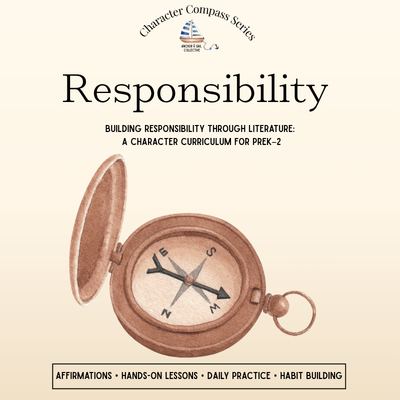
If you’re wanting to build responsibility in a way that actually fits into your day, you can find the full Responsibility unit here: 👉 (you can find the Responsibility unit here)
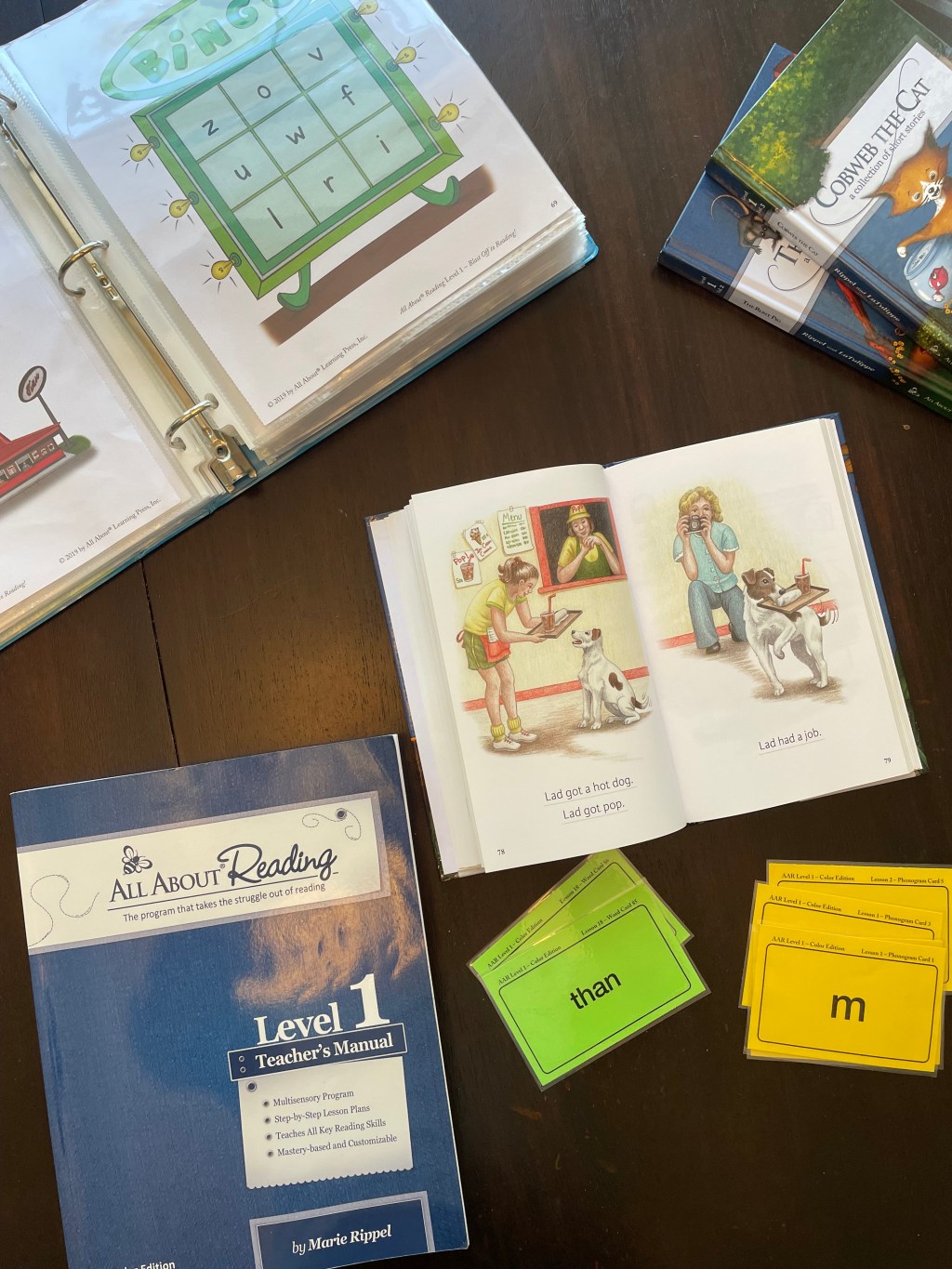
Phonics
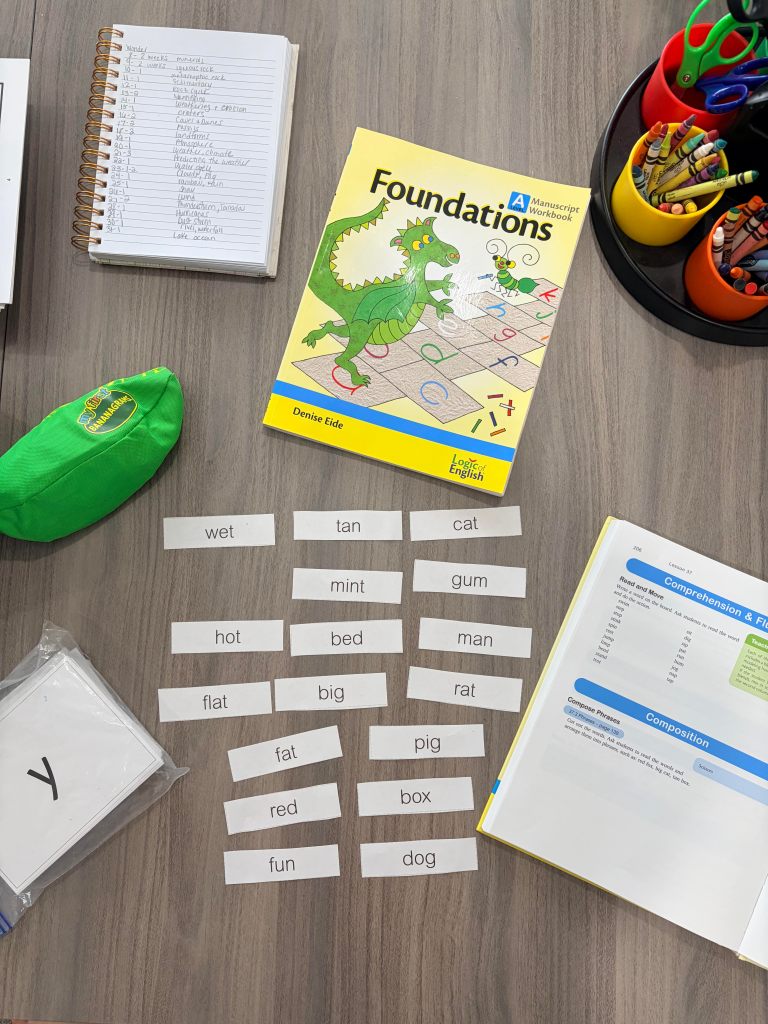
Logic of English
This is one of those programs that, as a teacher, I immediately appreciated.
It’s very clear. Very systematic. There’s no guessing.
It walks you through exactly how to teach reading step by step, and it includes movement and games, which is so important at this age.
It takes something that can feel overwhelming and makes it very doable.
Handwriting
Handwriting Without Tears
This is simple, and I mean that in the best way.
It focuses on proper letter formation, uses hands-on materials, and doesn’t rush kids before they’re ready.
We also pair this with writing affirmations from our character work, which gives handwriting a little more meaning than just copying letters.
Social Studies And Science
Little School of Smiths
My Place in Space & Me on the Map
These have been such a fun addition to our homeschool.
They introduce early geography and the solar system in a way that actually makes sense to kids, starting with where they are and expanding outward.
It’s hands-on, it’s visual, and it’s something we can talk about throughout the day.
Final Thoughts
If you’re choosing curriculum for your kindergartener, I would keep it simple.
You don’t need everything.
You need:
- a few strong core resources
- a rhythm that works for your family
- and space for things to actually stick
And I would say this too, don’t skip character.
Because when kids learn how to:
- follow through
- take responsibility
- and keep going
everything else becomes easier.
If you want to intentionally build that into your homeschool, you can find my Character Compass: Responsibility unit here:
👉 Character Compass: Responsibility




 Anchor and Sail Collective
Leave a comment