This post contains affiliate links. As an Amazon Associate, I earn from qualifying purchases at no extra cost to you.
If there’s one thing I know after 13 years in the classroom, it’s that not all math programs are created equal. I’ve taught math with scripted curriculums, worksheet-heavy beasts, inquiry-based adventures, and even the good ol’ overhead projector (RIP). Some curriculums made my teacher heart sing—others made me question my career choices by mid-October.
When it came time to pick a math program for my kindergartener this homeschool year, I wanted something that fit both my teaching instincts and my son’s needs.
Enter: Singapore Math Dimensions KA and KB.
Let me explain how I got here.

Why I Wanted a Curriculum (Not Just Math “Moments”)
While I love a spontaneous measuring game with dry pasta or counting rocks on a nature walk, I need to feel prepared. Winging it every day? Not for me. I’d be stressed, and my son would sense that faster than he senses an unopened snack bag.
I knew I wanted something that was:
- Hands-on
- Rooted in deep number sense
- Backed by research
- Visually engaging
- Light on prep for me
- And something that taught him why numbers work—not just how to circle the correct answer.
Meet My Matty
My son is a young five. He spent the last two years in a part-time preschool and came out knowing his numbers to 100, how to count by 10s, do basic addition and subtraction, and even compose and decompose numbers to 20 (shoutout to Numberblocks, honestly).
Math just clicks for him.
He’s the kind of kid who gets excited to spot patterns and who makes up his own addition problems for fun. So I wanted to honor that enthusiasm with something that wasn’t drill-and-kill—but also wasn’t fluff.
Why Singapore Dimensions Checked All My Boxes
1. It’s Mastery-Based (But Flexible!)
Singapore Dimensions doesn’t jump all over the place. It picks one concept and builds it, lesson by lesson, until your child really gets it. You start with a gentle intro, add on a little more each time, and by the end of the unit—boom! You’ve got a kid who isn’t just answering questions but truly understands.
2. It’s Visual and Hands-On
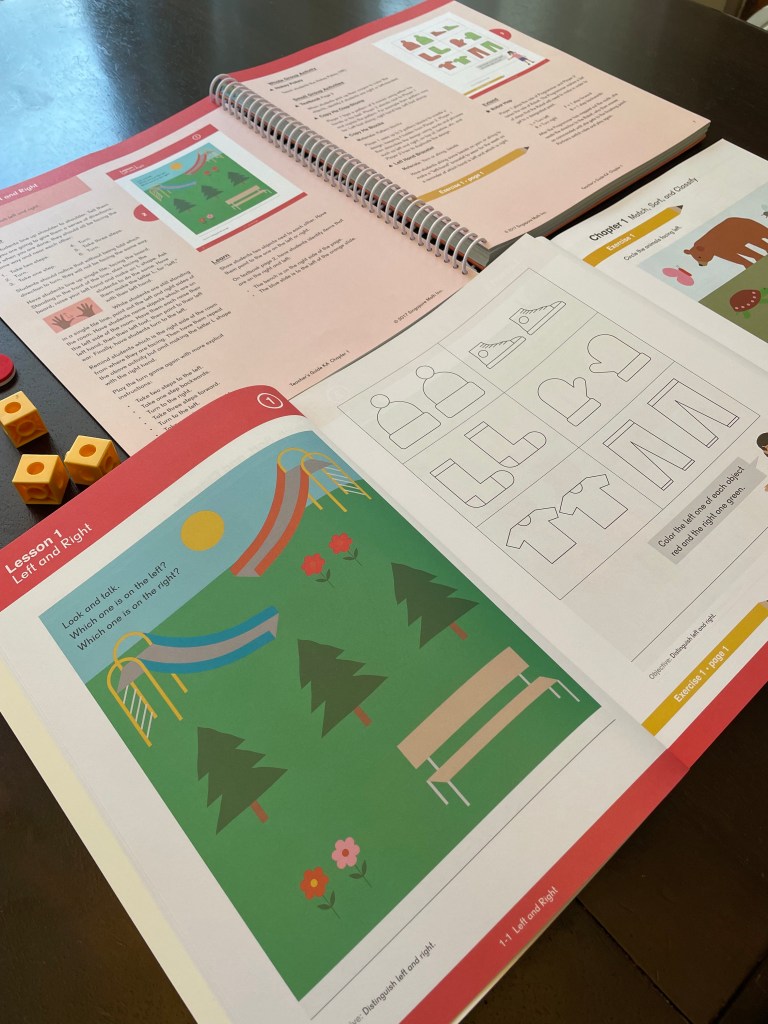
This curriculum is not just pages of number sentences. We’re talking ten-frames, part-part-whole models, number bonds, and actual activities you do together. We use real manipulatives (I bought ours separately) to build numbers, act out problems, and physically see what math means.
3. It’s Structured, but Not Overwhelming
Each lesson includes:
- A clear concept focus
- Guided activities (I pick and choose based on time and attention span)
- A colorful textbook with practice problems you do together
- A workbook for independent work (aka, while I reheat my coffee… again)
- Plus, the pictures are bright and friendly, which helps keep attention on task.
4. It Builds Mental Math Early
One of the goals of Singapore Math is helping kids create strong number sense and solve problems mentally. It’s not about memorizing tricks—it’s about understanding numbers.
We’re already seeing this with Matty. He’ll say things like, “I know 8 and 2 make 10, so 8 and 3 is just one more!” And that, my friend, is music to my teacher-mama ears.
5. It Adapts Easily for One Kid
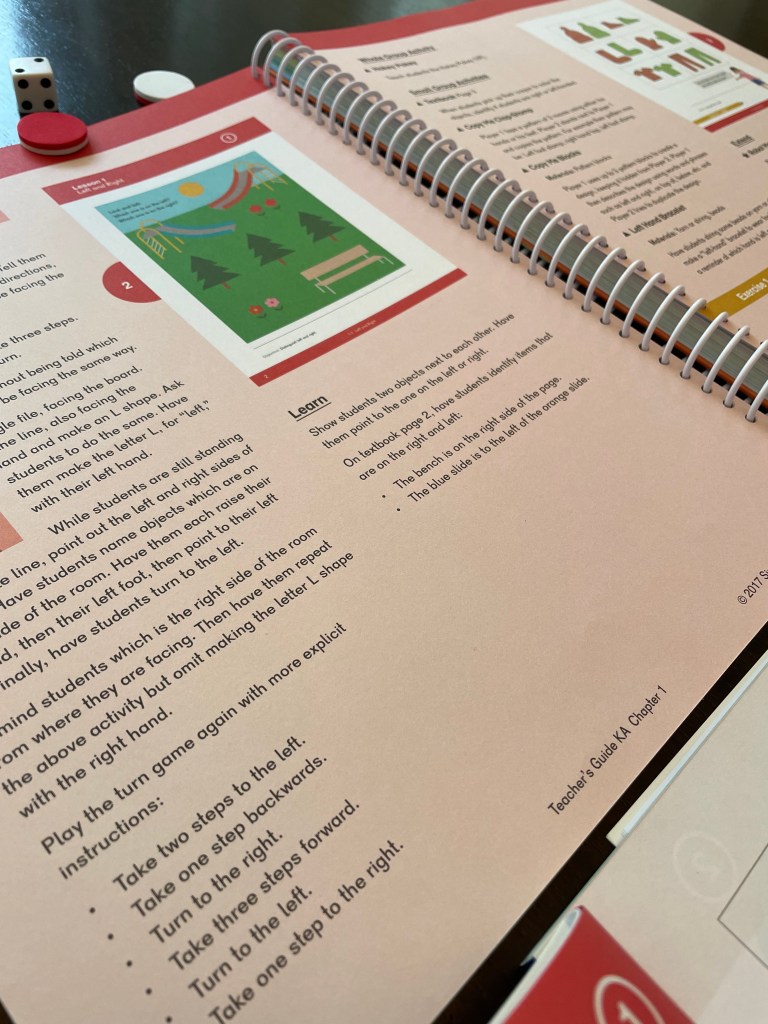
I bought the teacher’s manual written for classroom use, which means some of the activities are designed for a group—but I just modify them for one. (Honestly, it’s not hard. I just pretend I’m the second student. Bonus: more movement!)
There is a homeschool-specific manual available if you want something more scripted, but I like the flexibility of the classroom version.
Honest Thoughts on Prep & Planning
I did buy my own set of math manipulatives instead of the full K-5 Singapore kit (because, let’s be real, we do not need place value chips right now). I sorted the manipulatives into bins so they’re easy to grab. I’ll be sharing everything that I bought in a future blog post so make sure you subscribe so you don’t miss it!
The lessons don’t require much prep once you’ve got materials on hand. I skim the teacher guide the night before, pull out anything I need, and we’re good to go.
And if we don’t finish a lesson? No stress. We pick it up the next day.
Is It the Right Fit for You?
Here’s who I think Singapore Dimensions is best for:
- Parents who want depth, not just drills
- Kids who enjoy building, exploring, and doing math
- Families looking for a structured, colorful, thoughtful curriculum
- And maybe not the best fit if you want something entirely child-led or extremely scripted with no prep.
But for us? It’s a hit.
Interested in giving it a try? Check out some of the materials below.
—> Singapore Dimensions KA and KB Workbooks, Textbooks and Teacher Guides
—>Kindegarten KA Student Workbook
—>Kindergarten KA Teacher’s Guide






 Anchor and Sail Collective
Leave a comment