Heads up: This post contains affiliate links, which means I may earn a small commission at no extra cost to you if you choose to make a purchase. As an Amazon Associate, I earn from qualifying purchases. I only recommend what I truly use and love—thanks for supporting my homeschool journey!
From Scribbles to Something That Actually Looks Like Letters
Let’s be honest—handwriting sometimes feels like the forgotten subject. It’s the tagalong cousin of reading and math, often getting thrown a workbook and told, “Good luck, see you at sentence formation!”
Discover how Handwriting Without Tears makes learning to write fun and stress-free for young learners. This program uses simple, engaging methods and hands-on activities to build fine motor skills and letter formation confidence. Perfect for kids who need a gentle, effective approach to handwriting success!
But not in this house. Not with my background as a former kindergarten teacher (with a specialty in early literacy) and a son who’s five, energetic, and just starting his homeschool journey.
I knew from the start: handwriting needed to be taught, not just handed off.
And it needed to be taught well, with structure, movement, and clarity—because my child isn’t one to sit quietly and trace the alphabet for 30 minutes. (If your kid is? Teach me your ways.)
Why Handwriting Even Matters in 2025
I get it. We live in a digital world. Kids will likely be typing before they master cursive. But guess what?
Proper handwriting development:
- Boosts fine motor skills
- Supports reading and spelling
- Reduces writing fatigue
- Builds confidence (seriously, being able to write your name well is a flex when you’re five)
Bad handwriting habits start early and are hard to break. Ever seen a 9-year-old writing from the bottom up or with a fist grip? It’s not cute—and their hands hurt, which makes them hate writing more.
So yes, handwriting matters. Especially in kindergarten. Especially for boys like mine, who know their letters but form them however the wind blows.
Meet Matty: High-Energy, All-Uppercase-Letters Matty
My son Matty knows how to hold a pencil sort of correctly and can write his name… in all capital letters. He can form some numbers and letters from memory, but the direction and placement? A beautiful chaos.
He’s eager, curious, and energetic, which makes him awesome at math, science, and anything outdoors. But handwriting? That takes slowing down. And for a kid like him, slowing down feels like punishment unless it’s FUN and active.
So when I was choosing handwriting curriculum, I had a few must-haves:
What I Was Looking For in a Handwriting Program:
- Developmentally appropriate (we’re not aiming for cursive calligraphy in week one)
- Multisensory and movement-based
- Simple to teach (no fancy jargon or daily 20-step plans, please)
- Actually shows me how to teach letter formation, not just tells my kid to “copy”
- Respects the fact that kids aren’t robots—they need play, visuals, and variety
Why I Chose Handwriting Without Tears
Because it checked every. single. box.
Seriously. I used it in my classroom and knew it worked, but now that I’m seeing it from the homeschool perspective, I’m even more convinced. Let me break it down:
It’s Tactile, Visual, and Kinesthetic
HWT teaches handwriting through:
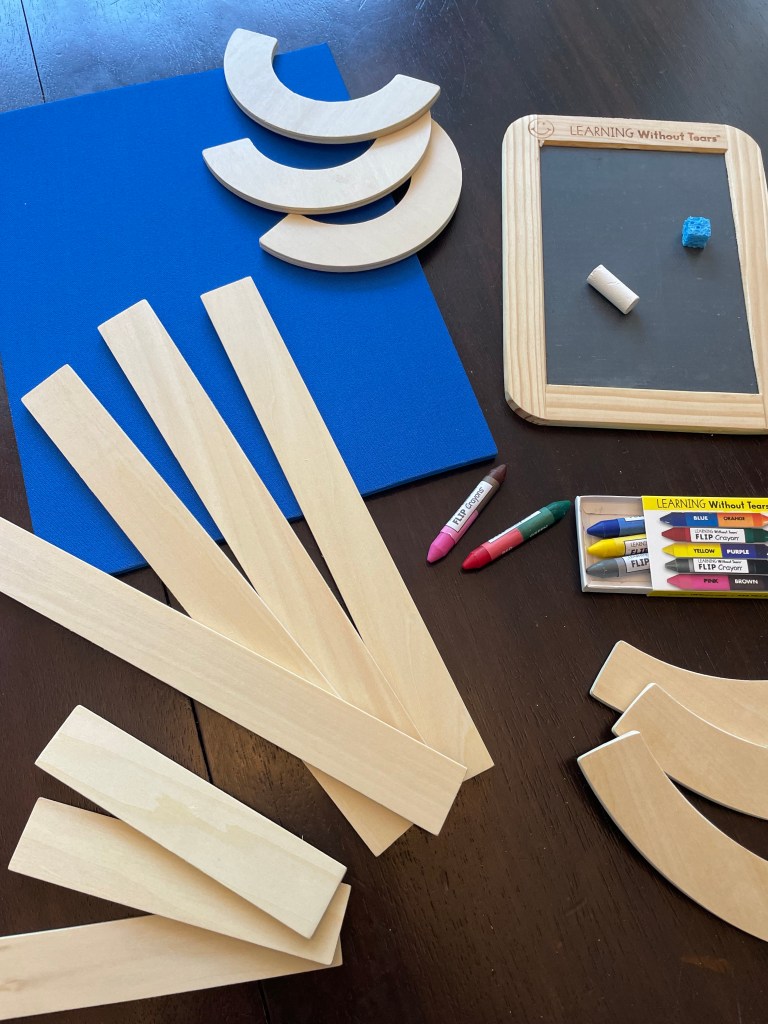
- Building letters with wooden shapes or foam sticks
- Air writing and large motor practice
- Blackboard and chalk (yes, my inner 90s kid was thrilled)
- Songs and movement (yes, really—there are actual letter formation songs)
And while I didn’t buy every manipulative they offer (because let’s be real, I’m not made of money), I did grab the letter building sticks, which double as an alphabet game when we’re feeling silly and the mini chalk board.
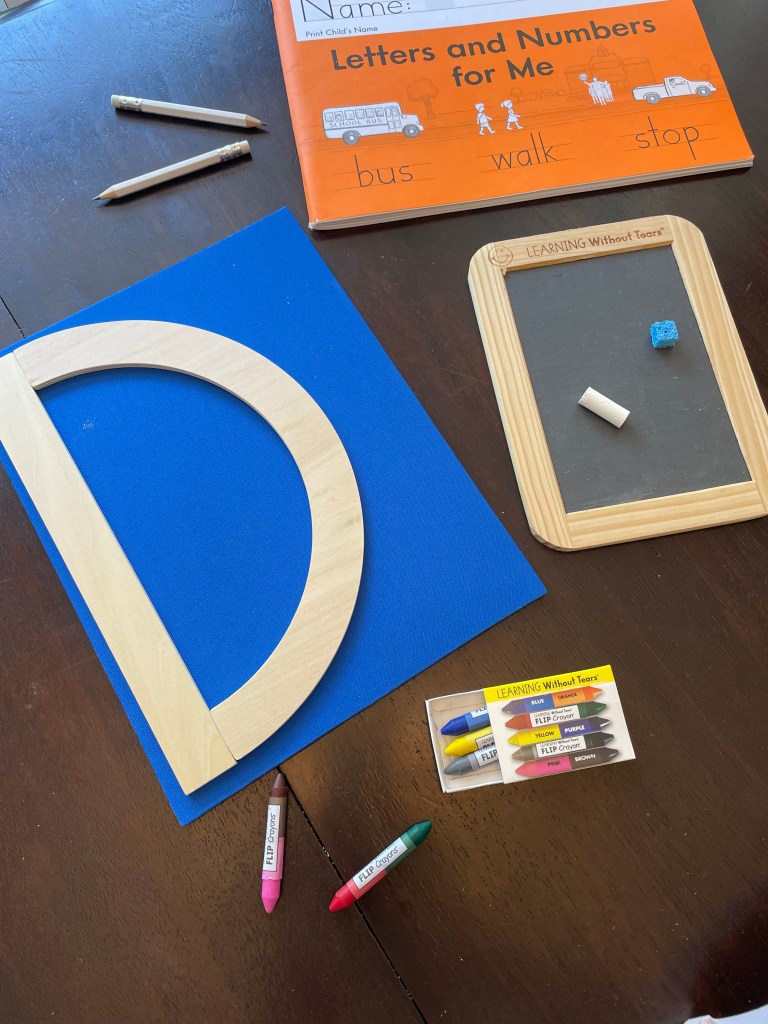
—> We’re using this Handwriting Without Tears workbook and this set of tools.
The Teacher’s Guide is a Game-Changer
Some people skip the teacher’s guide, but if you’re new to teaching handwriting (or like me, want to teach it correctly)—this guide is gold.
—> I personally use this Teacher’s Guide from Handwriting Without Tears, and it’s worth every penny.
It shows you:
- The order to teach letters (not A to Z!)
- Correct pencil grip strategies
- What to say as your child forms each stroke
- How to prevent hand fatigue or bad habits
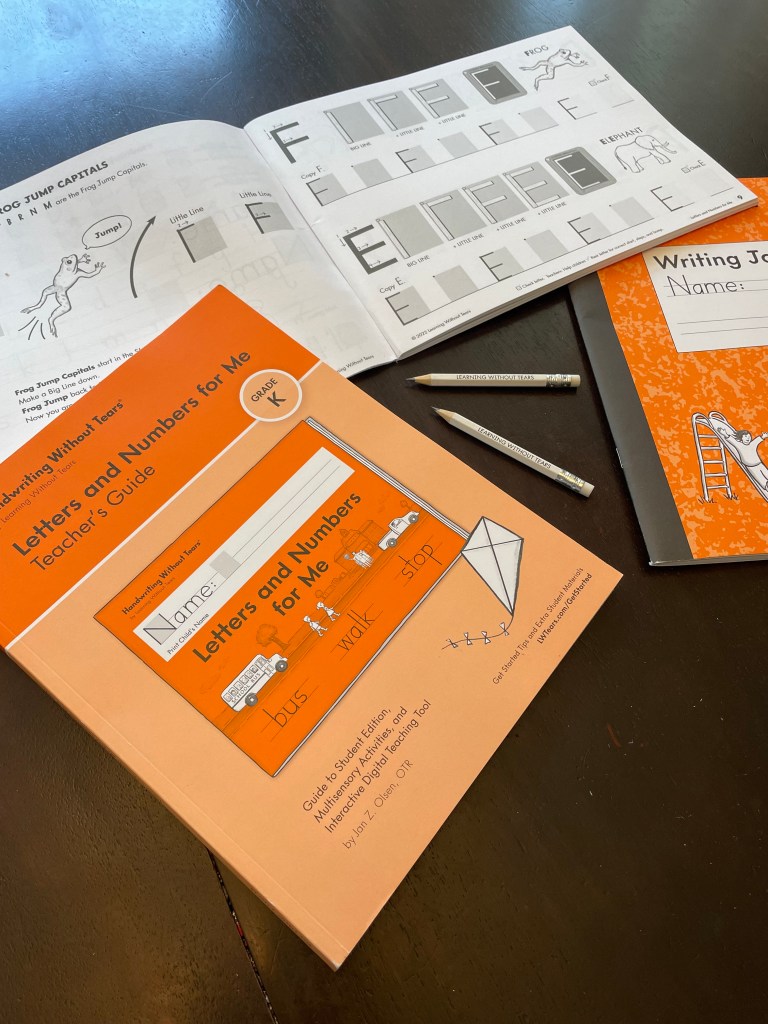
It’s like having a handwriting coach in your back pocket. And no, it’s not overwhelming. It’s actually written in plain human language.
It’s Designed for Kids’ Real Hands and Real Brains
The name “Handwriting Without Tears” is no joke. It’s literally designed to prevent tears—both yours and theirs.
The lines on the paper are wide, the directions are clear, and the pace is realistic. And unlike other programs I’ve used (cough endless tracing sheets), this one teaches letters as a process, not a guessing game.
Bonus Features I Love
- Comes in manuscript or cursive, depending on what you’re teaching
- Includes songs, digital options, and extra activities
- You can go as simple or as in-depth as you want
Has printables and extras available online
Common Questions I Get About HWT:
Do I really need the wooden pieces and chalkboard?
Nope! They’re great, but optional. You can DIY some of it or just use the workbook and verbal instructions with success.
Can I teach this to more than one child?
Yes! It works great for multiple ages—especially if you’re using it as part of a family morning basket or have older kids who need fine motor practice too.
How long does it take?
10–15 minutes a day. That’s it. Short, sweet, and consistent.
What age is it for?
I’d say anywhere from 4–8 depending on your child’s needs. There are multiple levels available.
My Final Take:
If you’re looking for a handwriting curriculum that feels more like play and less like punishment—this is it.
And if your child is a mover, a doodler, or just not that into writing yet? This could be the bridge that helps them love putting pencil to paper.
Ready to Try Handwriting Without Tears?
Here are the exact tools we use and love:
- Handwriting Without Tears Teacher’s Guide – Clear, practical, and incredibly helpful for teaching step-by-step.
- Handwriting Without Tears Workbook – Developmentally appropriate with just the right balance of structure and fun.
—> SAVE MONEY by buying the teachers’s guide and the student workbook bundled together HERE.
- Wood Pieces Set & Chalkboard Tools – Perfect for kinesthetic learners and hands-on letter practice.
Whether you grab just the workbook or go all in with the extras, I truly think this program can make handwriting a smoother, happier experience for both you and your child.
Any questions about HWT? Drop them below—I’m happy to share more of what’s working for us (and what’s not!).
#handwritingwithouttears #homeschoolkindergarten #handwritingcurriculum #homeschoolwriting #handsonlearning #homeschoollife #anchorandsailcollective





 Anchor and Sail Collective
Leave a comment